
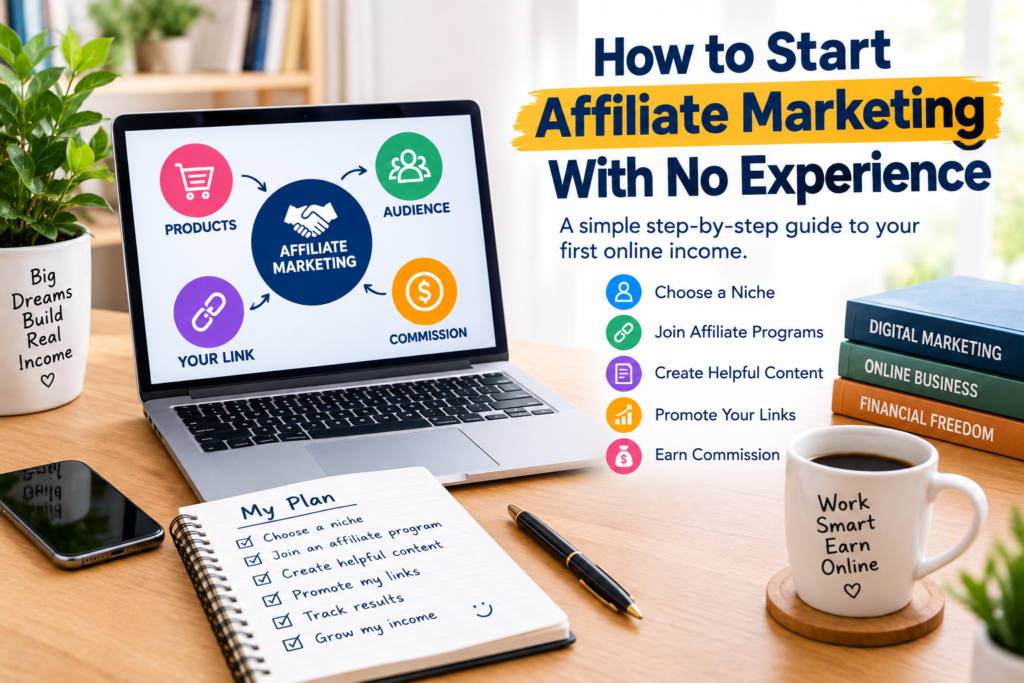
Affiliate marketing is one of the simplest ways to start building an online income without creating your own products. You can promote products or services from other companies and earn a commission when someone makes a purchase through your affiliate link.
The good news is that you don’t need previous marketing experience to get started. In this guide, you’ll learn how to start affiliate marketing with no experience and the basic steps you can follow as a beginner.
What Is Affiliate Marketing?
Affiliate marketing is a performance-based marketing model.
You partner with a company or affiliate network and receive a unique tracking link. When someone clicks your link and completes a qualifying action, such as buying a product, you may receive a commission.
The basic process looks like this:
Affiliate Program → Affiliate Link → Your Content → Customer Clicks → Purchase → Commission
Step 1: Choose a Niche
The first step is choosing a niche you can create content about consistently.
Popular niches include:
- Technology
- Fitness
- Beauty
- Personal finance
- Travel
- Online education
- Software
- Home products
- Fashion
Choose a topic that interests you and has products or services people already buy.
You don’t need to know everything about your niche. You can learn as you create content.
Step 2: Research Affiliate Programs
Once you have chosen your niche, look for affiliate programs related to your audience.
Some companies run their own affiliate programs, while others use affiliate networks.
Before joining a program, check:
- Commission rates
- Cookie duration
- Payment methods
- Minimum payout
- Program requirements
- Products or services offered
Always read the program’s terms before promoting its products.
Step 3: Choose Where You Will Create Content
You need a platform where you can reach your audience.
You could use:
- A blog or website
- YouTube
- TikTok
- Email newsletters
You don’t need to start everywhere. Choose one main platform and learn how to use it effectively.
A website can also be useful because you can publish helpful articles that continue attracting search traffic over time.
Step 4: Create Useful Content
Content is the foundation of affiliate marketing.
Instead of simply posting affiliate links, create content that helps people make decisions.
For example, you could publish:
- Product reviews
- Product comparisons
- Tutorials
- “Best products” guides
- How-to articles
- Buying guides
- Frequently asked questions
For example, instead of writing:
“Buy this laptop.”
You could write:
“Best Laptops for Digital Marketing Beginners”
Then explain the features, advantages, disadvantages, and who each laptop is suitable for.
Step 5: Learn Basic SEO
If you’re using a website, search engine optimization (SEO) can help people discover your content through search engines.
Start with basic SEO principles:
- Choose a clear keyword
- Use the keyword naturally
- Write useful and original content
- Create descriptive headings
- Optimize your page title
- Write a useful meta description
- Add relevant internal links
- Make your website easy to navigate
Don’t focus on adding a keyword as many times as possible. Focus on answering the reader’s question clearly.
Step 6: Promote Your Content
Creating content is only part of the process. You also need to get it in front of potential customers.
You can promote your content through:
- Social media
- Search engines
- YouTube
- Email marketing
- Online communities where promotion is allowed
Avoid spamming affiliate links. Focus on helping people first.
Step 7: Be Transparent About Affiliate Links
Tell your audience when you may earn a commission from a recommendation.
A simple disclosure can explain that some links are affiliate links and that you may receive a commission if someone makes a purchase.
Being transparent can help you build trust with your audience.
Step 8: Track Your Results
Affiliate marketing requires testing and improvement.
Track information such as:
- Link clicks
- Traffic
- Conversions
- Commission earned
- Best-performing content
- Best-performing products
If one article receives many visitors but very few clicks, you may need to improve your product recommendations or calls to action.
Step 9: Improve Your Skills
You don’t need to know everything before starting.
Learn the basics of:
- Content writing
- SEO
- Social media marketing
- Copywriting
- Analytics
- Email marketing
The important thing is to learn while taking action.
Common Affiliate Marketing Mistakes to Avoid
Beginners often make a few common mistakes.
Promoting Too Many Products
Don’t promote every product you find. Focus on products that are relevant to your audience.
Focusing Only on Commissions
A high commission doesn’t automatically mean a product is a good recommendation. Consider whether the product is genuinely useful to your audience.
Expecting Quick Results
Affiliate marketing can take time. Building traffic, trust, and content takes consistent effort.
Copying Other People’s Content
Create original content based on your own research and perspective. Avoid copying articles, reviews, or social media posts.
Ignoring Your Audience
Your goal shouldn’t simply be to get clicks. Understand what your audience needs and create content that helps them solve problems.
How Much Money Can Beginners Make?
There is no guaranteed income in affiliate marketing.
Your results can depend on factors such as:
- Your niche
- Traffic
- Content quality
- Audience trust
- Products you promote
- Conversion rates
- Marketing strategy
Some beginners may earn little or nothing at first, while others may generate commissions as their traffic and audience grow.
Focus on building a useful platform rather than expecting immediate income.
A Simple Affiliate Marketing Plan for Beginners
If you’re wondering how to start affiliate marketing with no experience, keep your first plan simple:
Step 1: Choose one niche.
Step 2: Find relevant affiliate programs.
Step 3: Choose one main content platform.
Step 4: Create helpful content consistently.
Step 5: Add relevant affiliate links.
Step 6: Promote your content.
Step 7: Track your results.
Step 8: Improve what works.
This approach allows you to learn the business step by step without trying to master everything at once.
Final Thoughts
Learning how to start affiliate marketing with no experience is possible if you’re willing to learn, create useful content, and stay consistent.
You don’t need to be an expert on day one. Start with one niche, one platform, and a small number of relevant products. As your skills and audience grow, you can expand your affiliate marketing business.
The key is to focus on helping your audience first. When people find your content useful and trust your recommendations, affiliate marketing can become a potential source of online income.